
There's a line that gets used in the hospitality industry: the best service is the kind you don't notice. The room is clean when you arrive. The coffee is fresh. The temperature is comfortable. Nobody makes a show of it — it just works. And because it works, you're free to focus on whatever you're actually there to do.
Good IT operates on the same principle. When technology is working the way it should, nobody in your organization is thinking about it. They're thinking about their clients, their projects, their deadlines, and their growth. IT becomes invisible — not because it's absent, but because it's functioning so well that it never becomes a distraction.
That sounds simple. In practice, it's one of the hardest things to deliver — and one of the most valuable.
Why Visibility Usually Means Something's Wrong
Think about the last time you had a conversation about your technology. Chances are, it wasn't because everything was running beautifully. It was because something broke, something was slow, something didn't connect, or someone couldn't get into the system they needed.
In most businesses, IT is visible when it fails and invisible when it works. That creates an unfortunate dynamic where the only conversations about technology are negative ones — complaints, frustrations, emergency requests, and budget surprises.
Over time, this conditions everyone in the organization to associate IT with problems. Technology becomes the thing that gets in the way, the department that always needs more money, the source of friction that nobody can quite fix.
Invisible IT flips that dynamic. Instead of being noticed when things go wrong, IT is engineered to stay out of the way entirely — to function so smoothly and so proactively that the organization barely registers its presence.
What's Actually Happening Behind the Scenes
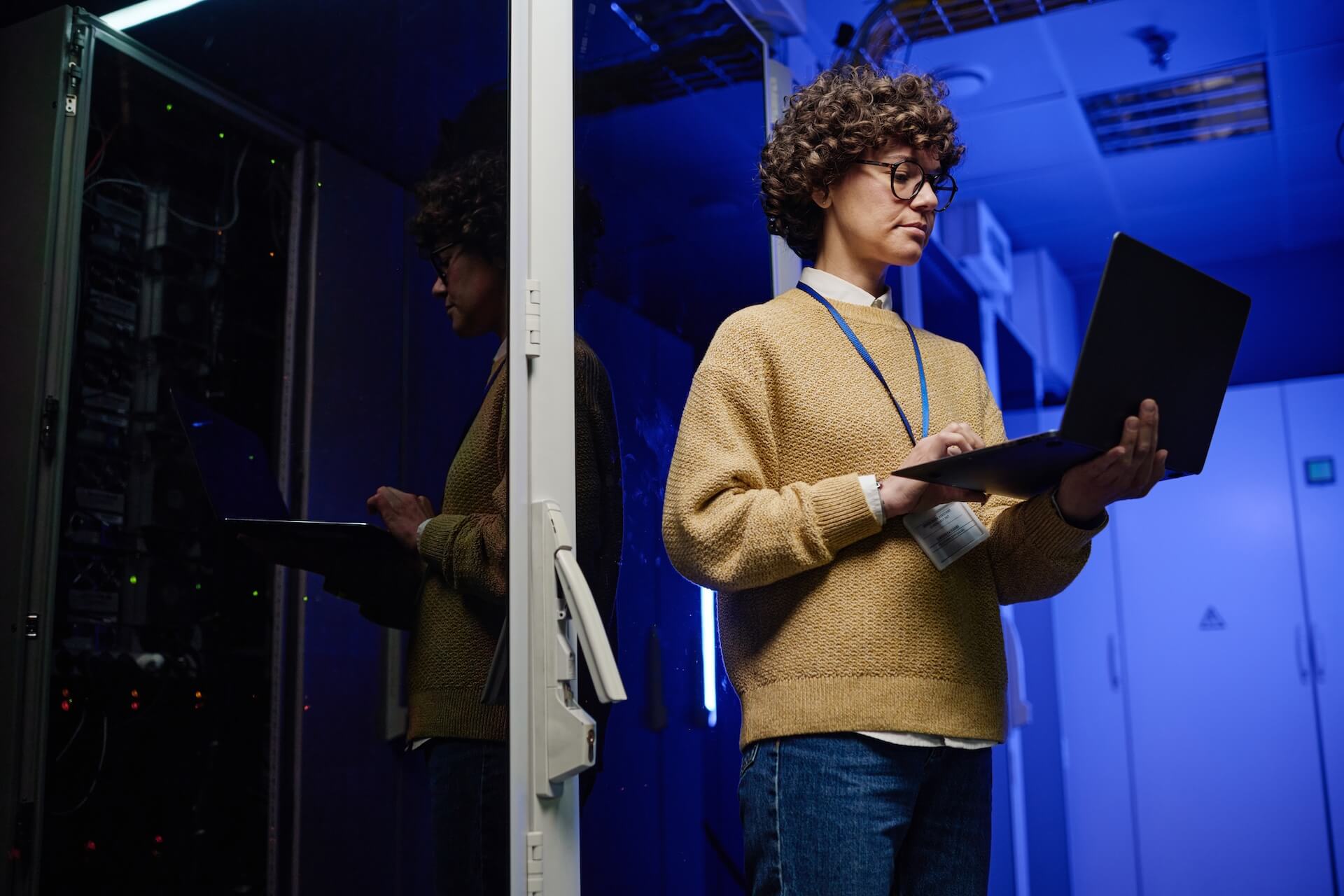
Invisible IT isn't the absence of work. It's the presence of so much well-executed work that the results look effortless. Behind every seamless day of operations, there's a substantial amount of activity that nobody sees — and that's exactly the point.
Proactive Monitoring and Remediation Systems are being watched continuously. When a server's disk space starts running low, it's expanded before anyone notices performance degradation. When a workstation begins showing signs of hardware failure, the replacement is planned and staged before the device dies. When a security patch is released, it's tested and deployed during a maintenance window — not after an exploit makes the news.
The key word is "before." Invisible IT is defined by problems that are resolved before they become visible to the end user. The help desk ticket that never gets submitted because the issue never reached the employee's desk — that's the metric that matters most.
Routine Maintenance Updates, patches, firmware upgrades, certificate renewals, backup verifications, and system optimizations are happening on a regular cadence. None of these are exciting. Most of them go completely unnoticed. But each one is a small act of prevention that keeps the environment stable, secure, and performant.
When maintenance is deferred — when patches are skipped, backups aren't verified, and systems aren't optimized — the result is a slow accumulation of technical debt that eventually surfaces as a visible problem. Invisible IT is what happens when that maintenance is never deferred.
Vendor and License Management Software licenses are renewed before they expire. Vendor contracts are reviewed before they auto-renew at unfavorable terms. Hardware warranties are tracked so that replacements are planned proactively rather than discovered to be expired during a failure. These administrative tasks don't generate praise when they're handled well, but they generate significant frustration when they're not.
Security Operations Threat monitoring, vulnerability scanning, endpoint protection, access management, and incident response planning are all running continuously. When a suspicious login attempt is detected at 3 a.m., it's investigated and addressed without the business owner ever hearing about it — unless escalation is warranted. The absence of security incidents isn't luck. It's the result of consistent, deliberate work that happens in the background.
User Experience Management Invisible IT extends to how employees interact with their tools every day. Are login processes streamlined? Are applications loading quickly? Are collaboration tools configured properly? Are new hires getting set up on day one with everything they need? These touchpoints shape how your team experiences technology — and when they're managed well, technology simply becomes part of the flow of work rather than an obstacle within it.
The Hospitality Mindset
There's a reason the hospitality analogy resonates. The best hotels and restaurants don't draw attention to the effort behind the experience. They don't narrate their process or remind you how hard they're working. They create an environment where everything just works, and the guest is free to focus on the reason they're there.
IT providers who adopt this mindset approach their work differently. Their goal isn't to be thanked for fixing problems — it's to eliminate the problems so thoroughly that there's nothing to fix. Their measure of success isn't ticket volume or response time — it's the absence of disruption.
This requires a fundamentally proactive orientation. Reactive IT providers are visible by nature — they show up when something breaks, they fix it, and they're seen as heroes until the next failure. Proactive IT providers are invisible by design — they prevent the failures that would have made them visible, and their value is measured in the stability and reliability of the environment.
What This Means for Your Business
The practical impact of invisible IT goes beyond fewer disruptions — though that alone has significant value. It changes how your organization relates to technology.
Leadership focuses on strategy, not firefighting. When IT is invisible, business leaders aren't spending time diagnosing technology problems, mediating between frustrated employees and overwhelmed support, or approving emergency expenditures. They're focused on growth, clients, and operations — the things they were actually hired to do.
Employees stay productive and engaged. Technology frustration is a real contributor to employee dissatisfaction. When tools work reliably, teams are more productive, more engaged, and less likely to develop the kind of learned helplessness that comes from working with systems that constantly let them down.
Client experience improves. When your internal systems run smoothly, the impact flows outward. Client communications are timelier. Deliverables are more consistent. Response times are faster. The connection between internal IT quality and external client experience is direct, even if it's not always obvious.
Technology becomes a competitive advantage. When your infrastructure is stable, secure, and aligned with your business goals, technology stops being a cost center and starts being a differentiator. You can move faster, scale more confidently, and adapt more easily than competitors who are still fighting with their systems.
The Measure of Success
Here's the paradox of invisible IT: the better it works, the less you notice it. And that makes it genuinely difficult to appreciate — which is why many businesses don't realize the value until they've experienced the alternative.
If your technology environment is characterized by frequent disruptions, reactive support, surprise expenses, and a general sense that things are held together with workarounds and hope, you know what visible IT feels like. Invisible IT is the opposite of that experience — and the difference is less about the tools and more about the approach.
Wondering what it would feel like if technology simply disappeared from your list of daily concerns?
The Envoy team is built around the idea that the best IT is the kind you never have to think about. If you're ready for technology that works quietly in the background while you focus on running your business, we'd welcome that conversation.